


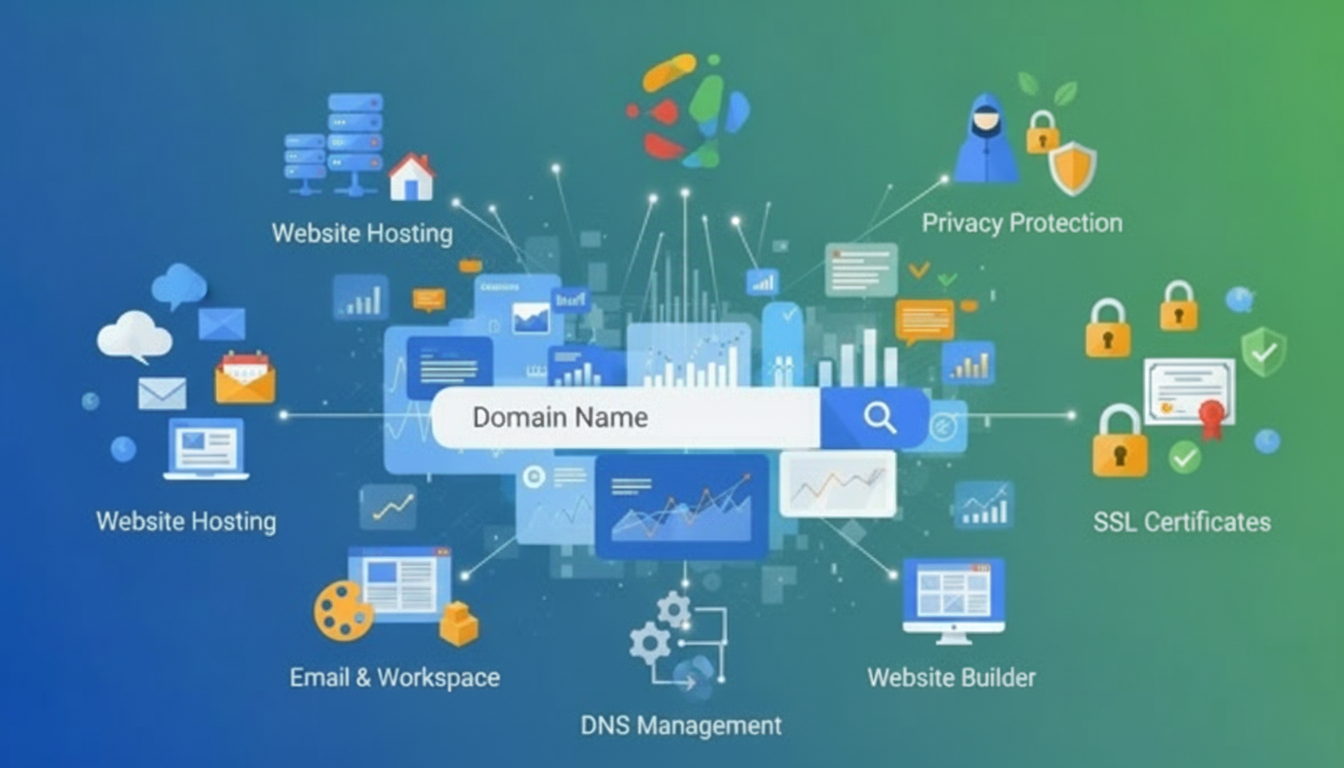
The Foundation of Digital Identity: A Comprehensive Guide to Domain Names
In the physical world, if you want to visit a business, you look for its street address. In the digital world, that address is represented by a Domain Name. While the internet operates on a complex web of numerical codes and server locations, domain names were created to translate that technical complexity into something human-readable, memorable, and brandable.
A domain name is much more than a technical shortcut; it is a vital piece of digital real estate, a core component of brand equity, and the primary way users navigate the vast landscape of the World Wide Web.
What is a Domain Name? (The Phonebook Analogy)
To understand a domain name, one must first understand the IP (Internet Protocol) Address. Every computer or server connected to the internet is assigned a unique string of numbers, such as 192.168.1.1 or a much longer IPv6 string.
Because humans are not designed to memorize strings of random numbers for every website they visit, the Domain Name System (DNS) was developed. Think of the DNS as the internet’s “phonebook.”
- The IP Address is the actual telephone number.
- The Domain Name is the person’s name listed in the directory.
When you type a domain like google.com into your browser, the DNS looks up that name, finds the corresponding IP address, and directs your browser to the correct server.
The Anatomy of a Domain Name
A domain name is not a single entity; it is composed of several distinct parts, each serving a specific hierarchical purpose. Take the example: www.example.co.uk
1. The Top-Level Domain (TLD)
The TLD is the suffix at the end of the domain. Originally, there were only a few (like .com, .org, and .net), but today there are hundreds.
- gTLDs (Generic):
.com(commercial),.org(non-profit),.edu(education). - ccTLDs (Country Code):
.my(Malaysia),.uk(United Kingdom),.jp(Japan). These are often used by local businesses to signal their geographic focus. - nTLDs (New Generic): Modern suffixes like
.agency,.tech,.photography, or.solutions.
2. The Second-Level Domain (SLD)
This is the core identity—the “example” in example.com. This is the part that businesses register and brand. It is unique within its specific TLD; while there can be an example.com and an example.net, there can only be one owner of example.com.
3. The Subdomain
This is a prefix added to the domain to organize different sections of a website. Common examples include blog.example.com or store.example.com. For professional agencies, subdomains are often used to host staging environments or client portals.
Why Domain Names Matter for Business
For a professional organization, a domain name is the cornerstone of their digital strategy. It influences everything from search engine rankings to consumer trust.
1. Establishing Credibility
A business operating off a free subdomain (like mybusiness.blogspot.com) appears amateur and temporary. Owning a custom domain signals that the business is established, professional, and invested in its long-term digital presence. It provides a “flawless” first impression to potential partners and clients.
2. Search Engine Optimization (SEO)
Search engines like Google use domain names as a ranking signal. While having keywords in a domain isn’t as powerful as it once was, a domain that matches the brand name and uses a reputable TLD (like .com) helps search engines understand the site’s authority and relevance.
3. Ownership and Portability
When you own a domain name, you own your “address.” If you decide to move your website from one hosting provider to another, your domain remains the same. Your customers never have to “re-learn” where to find you; you simply point your domain to the new server.
The Lifecycle of a Domain Name
Acquiring and maintaining a domain is a regulated process overseen by ICANN (Internet Corporation for Assigned Names and Numbers).
Registration
You do not “buy” a domain permanently; you “lease” it from a Registrar (like GoDaddy, Namecheap, or Google Domains). Registration is typically done on an annual basis, though many businesses register for 5–10 years in advance to ensure they don’t lose the name.
The WHOIS Database
When a domain is registered, the owner’s information is recorded in the WHOIS database. For privacy and security, many professional users opt for Domain Privacy, which masks their personal contact details from public view to prevent spam and identity theft.
Expiration and Redemption
If a registration is not renewed, the domain enters an expiration grace period. If still not renewed, it eventually goes into a “redemption” phase before being released back to the public market. For a business, allowing a domain to expire can be catastrophic, leading to a total loss of website traffic and professional email services.
Choosing the “Perfect” Domain Name
For a web developer or a digital solutions agency, selecting a domain is a strategic exercise. Here are the professional standards for a high-quality domain:
| Criterion | Best Practice |
| Length | Short and concise. 1–3 words is ideal. |
| Memorability | Avoid hyphens and numbers, which are difficult to communicate verbally. |
| TLD Choice | .com is still the global standard for trust, but ccTLDs (like .com.my) are excellent for local SEO. |
| Brandability | It should sound like a brand, not just a list of keywords. |
Technical Management: DNS Records
Owning the domain is only the first step. To make it “work,” the owner must configure the DNS settings. This is where the domain is linked to other services:
- A Records: Point the domain to the IP address of the web host.
- CNAME Records: Used to alias one name to another (like pointing
wwwto the root domain). - MX Records: Crucial for business email services, directing mail to providers like Google Workspace or Microsoft 365.
Professional agencies often manage these records with extreme care, as a single typo in a DNS record can take a company’s entire website and email system offline.
Conclusion: The Digital Anchor
A domain name is the anchor of a brand’s online existence. It is the starting point for every website project, whether it’s a simple landing page for a flooring provider or a complex e-commerce system for a pet supply business.
In an increasingly crowded internet, a clear, professional, and well-managed domain name provides the stability and authority a business needs to thrive. It is the one part of the digital world that you truly own and control making it perhaps the most important digital asset a company will ever acquire.