



















E-Invoice Related Questions

What is Annual Return?
January 9, 2026
Directors vs Shareholders:
January 9, 2026
Want to set up a limited company? Don’t know anything about limited companies?
January 9, 2026
Failure to display the company name and registration number will result in penalties!
January 9, 2026
How many types of taxes are there in Malaysia?
January 9, 2026
How to Minimize Personal Income Tax in 2023?
January 9, 2026
Service tax increases from 6% to 8% starting March 1, 2024
January 9, 2026
How to Make Company Trips More Tax-Efficient?
January 9, 2026
Employee benefits also be tax deductible for the company?
January 9, 2026
What types of donations are eligible for tax deduction?
January 9, 2026
What entertainment expenses are tax deductible?
January 9, 2026
Do you need to pay tax when making money through stocks?
January 9, 2026
To conduct business with a limited company, payment of CP204 is required.
January 9, 2026
Personal income tax that workers need to report FORM BE
January 9, 2026
2023 tax relief summary
January 9, 2026
How much do you know about Form E?
January 9, 2026
Common Questions about Low-Value Goods (LVG) Sales Tax
January 9, 2026
Why Are You Easily Targeted by LHDN?
January 9, 2026
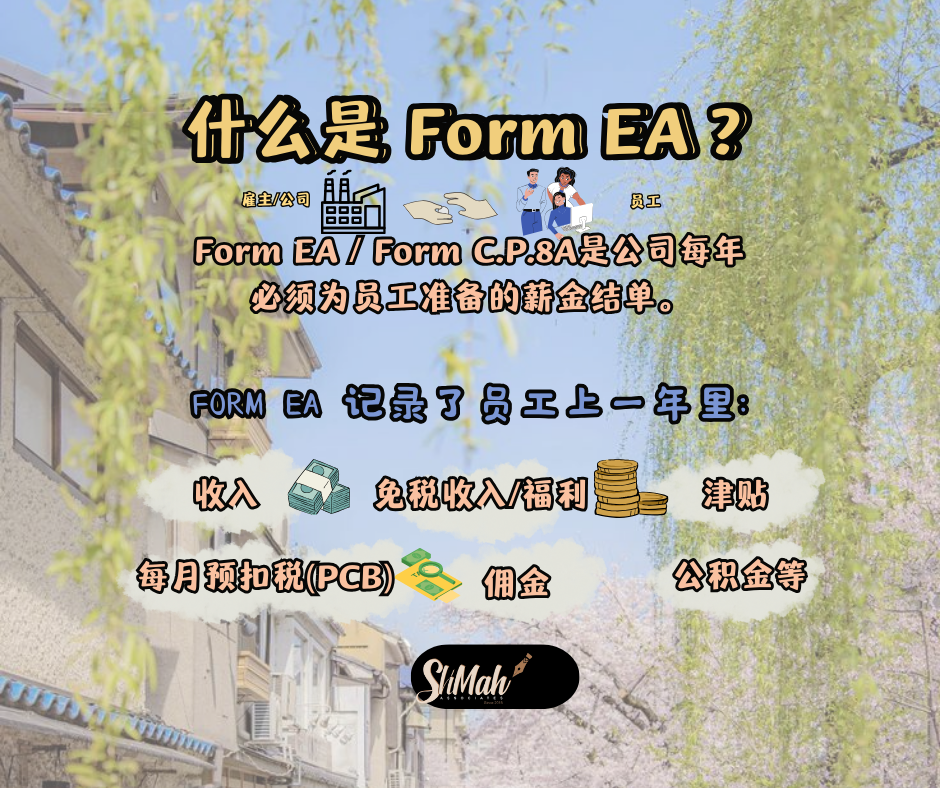
Form EA: Essential for All Salaried Individuals
January 9, 2026
Do I need to pay tax if I win money from buying 4D?
January 9, 2026
Understand which forms you need to submit in 30 seconds!
January 9, 2026
How to improve quality of life while minimizing taxes?”
January 9, 2026
The self-payment EPF limit has been increased to RM100K!
January 9, 2026
RM 100 e-wallet application rejected? Let us tell you why~
January 9, 2026
E-Invoice Related Questions
January 9, 2026
Updating Personal Information in the PADU System to Obtain Government Assistance
January 9, 2026
Old SSPN website will be closed starting from January 10th
January 9, 2026
Electricity Tariff Increase in 2024
January 9, 2026
How many types of taxes are there in Malaysia?
January 9, 2026
How to Minimize Personal Income Tax in 2023?
January 9, 2026
Service tax increases from 6% to 8% starting March 1, 2024
January 9, 2026
The self-payment EPF limit has been increased to RM100K!
January 9, 2026
Front End System VS Back End System
January 9, 2026
What is Annual Return?
January 9, 2026
How to Make Company Trips More Tax-Efficient?
January 9, 2026
Is it advisable for the company’s multiple branches to share a single bank account?
January 9, 2026
Employee benefits also be tax deductible for the company?
January 9, 2026
Sole Proprietorship VS Limited Liability Partnership VS Private Limited Company
January 9, 2026
What types of donations are eligible for tax deduction?
January 9, 2026
What entertainment expenses are tax deductible?
January 9, 2026
Intangible Assets
January 9, 2026
Selling/Disposing of Company Fixed Assets
January 9, 2026
6 Director Types in Malaysia
January 9, 2026
The usefulness of debtor aging reports to companies
January 9, 2026
How to differentiate between company assets and liabilities?
January 9, 2026
Directors vs Shareholders:
January 9, 2026
Profit Margin
January 9, 2026
Do you need to pay tax when making money through stocks?
January 9, 2026
To conduct business with a limited company, payment of CP204 is required.
January 9, 2026
Personal income tax that workers need to report FORM BE
January 9, 2026
Want to set up a limited company? Don’t know anything about limited companies?
January 9, 2026
2023 tax relief summary
January 9, 2026
How much do you know about Form E?
January 9, 2026
RM 100 e-wallet application rejected? Let us tell you why~
January 9, 2026
E-Invoice Related Questions
January 9, 2026
Common Questions about Low-Value Goods (LVG) Sales Tax
January 9, 2026
Failure to display the company name and registration number will result in penalties!
January 9, 2026
Accounting Principles
January 9, 2026
Updating Personal Information in the PADU System to Obtain Government Assistance
January 9, 2026
Old SSPN website will be closed starting from January 10th
January 9, 2026
Electricity Tariff Increase in 2024
January 9, 2026
Why Are You Easily Targeted by LHDN?
January 9, 2026
Form EA: Essential for All Salaried Individuals
January 9, 2026
How to Improve Inventory Turnover Rate for a Company?
January 9, 2026
Do I need to pay tax if I win money from buying 4D?
January 9, 2026
Sole Proprietorship: How much do you know?
January 9, 2026
Partnership: How much do you know?
January 9, 2026
Understand which forms you need to submit in 30 seconds!
January 9, 2026
Important Notice Regarding Tenancy Agreements
January 9, 2026
How to improve quality of life while minimizing taxes?”
January 9, 2026
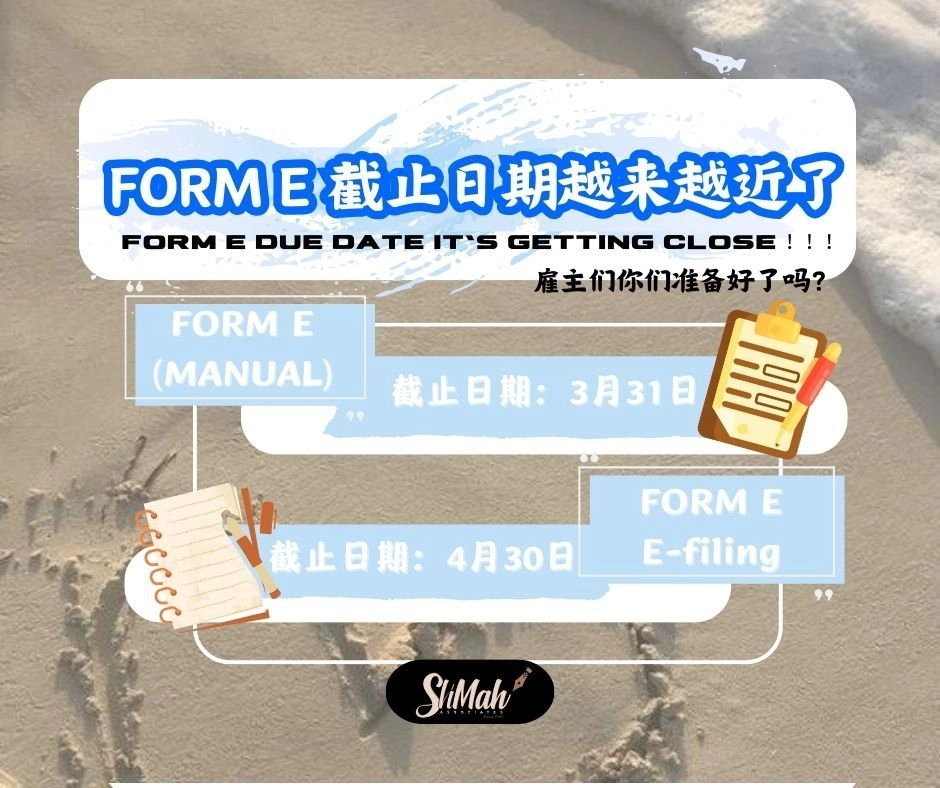
FORM E Due Date
January 9, 2026
Insurance, EPF, and SOCSO are eligible for exemptions
January 9, 2026
incorporation of company
January 9, 2026
Strike Off of Limited Company
January 9, 2026

E-Invoice Related Questions

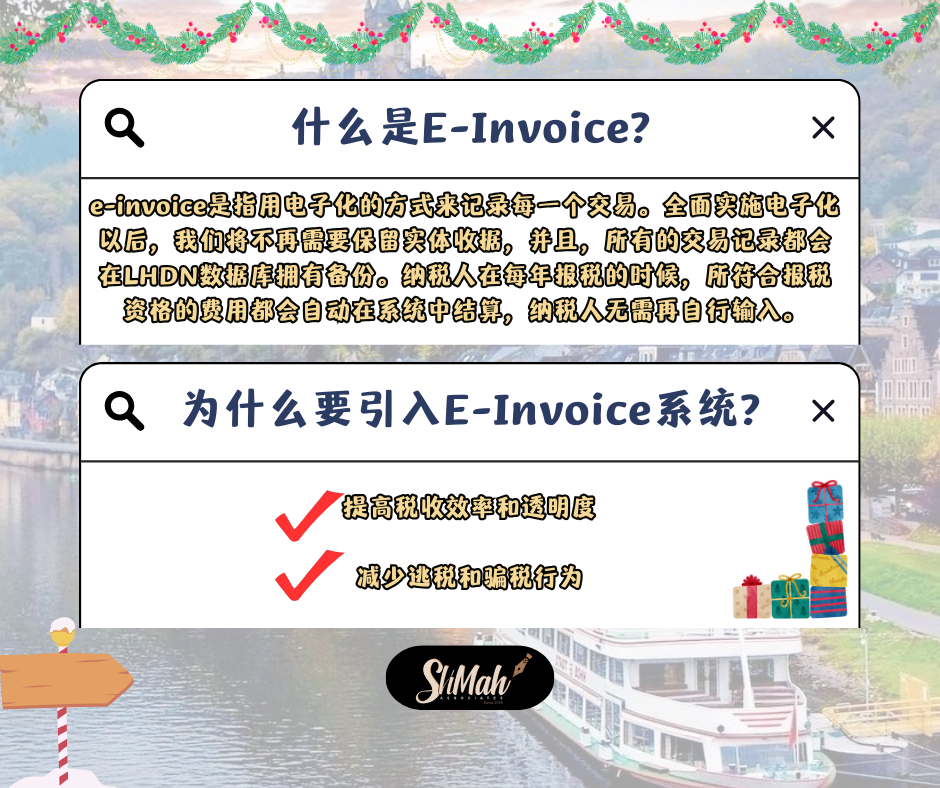
What is E-Invoice?
E-invoice refers to the electronic recording of each transaction. With comprehensive implementation of electronic methods, physical receipts will no longer be necessary, and all transaction records will be backed up in the LHDN database. When taxpayers file their annual taxes, eligible expenses will automatically be calculated in the system, eliminating the need for taxpayers to input them manually.

Why introduce the E-Invoice system?
To enhance tax efficiency and transparency
To reduce tax evasion and fraud

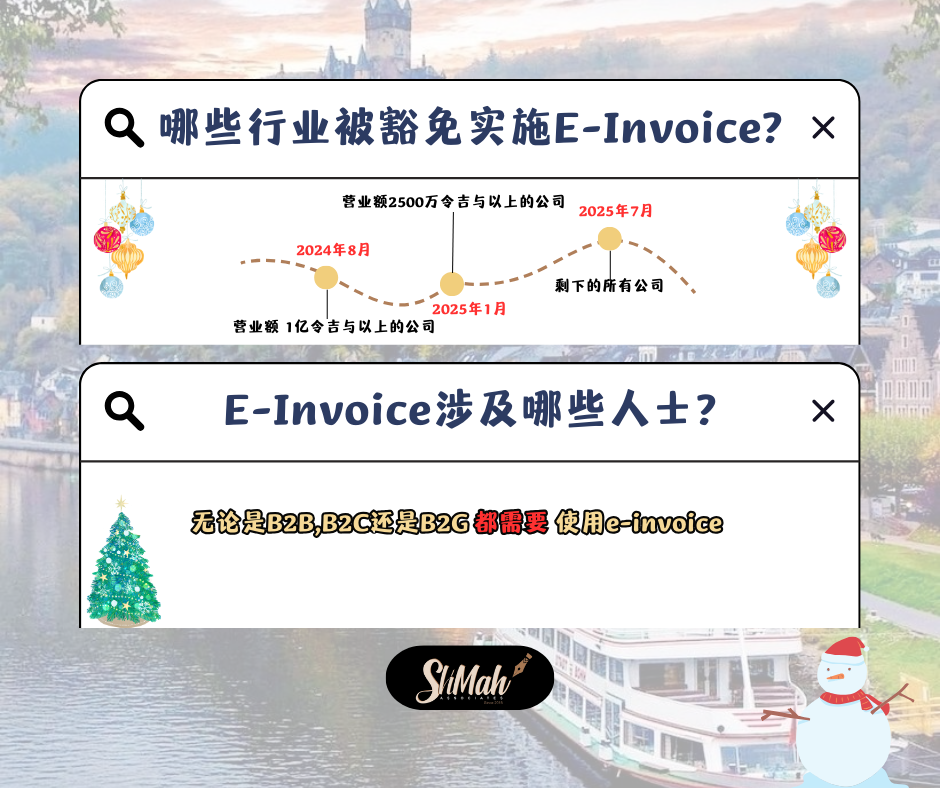
Which industries are exempt from implementing E-Invoice?

Who is involved in E-Invoice?
Whether it’s B2B, B2C, or B2G, e-invoice usage is required.

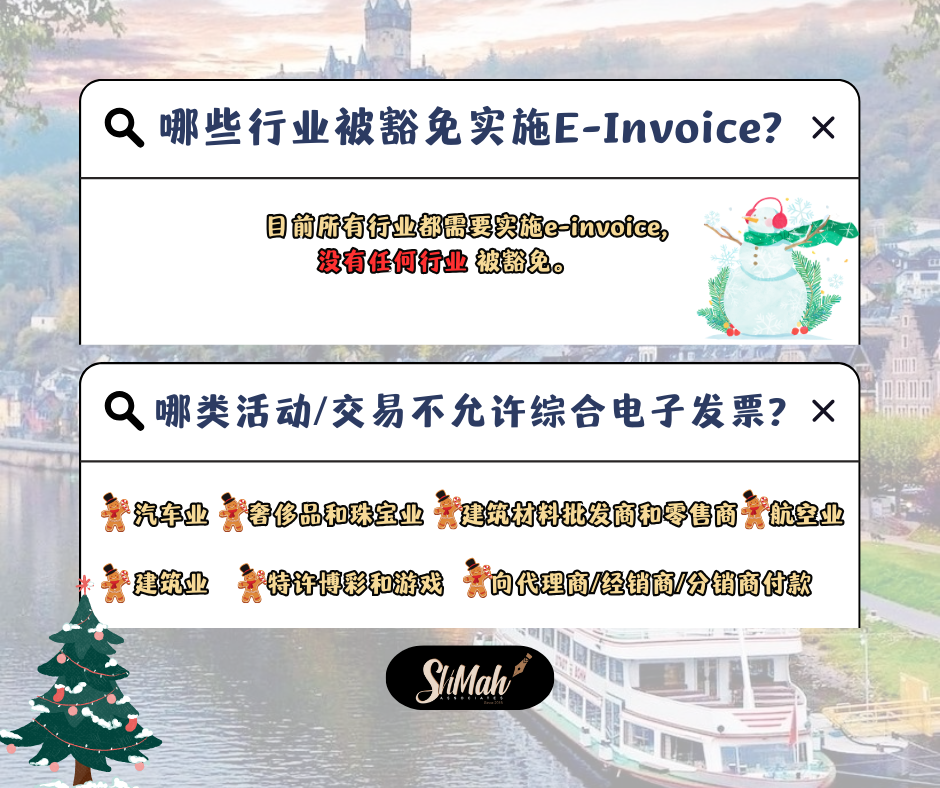
Which industries are exempt from implementing E-Invoice?
Currently, all industries are required to implement e-invoice, with no exemptions.

What types of activities/transactions are not allowed to use consolidated e-invoices?
Automotive industry
Aviation industry
Luxury goods and jewelry industry
Construction industry
Building material wholesalers and retailers
Licensed gaming and gambling
Payments to agents/distributors/dealers

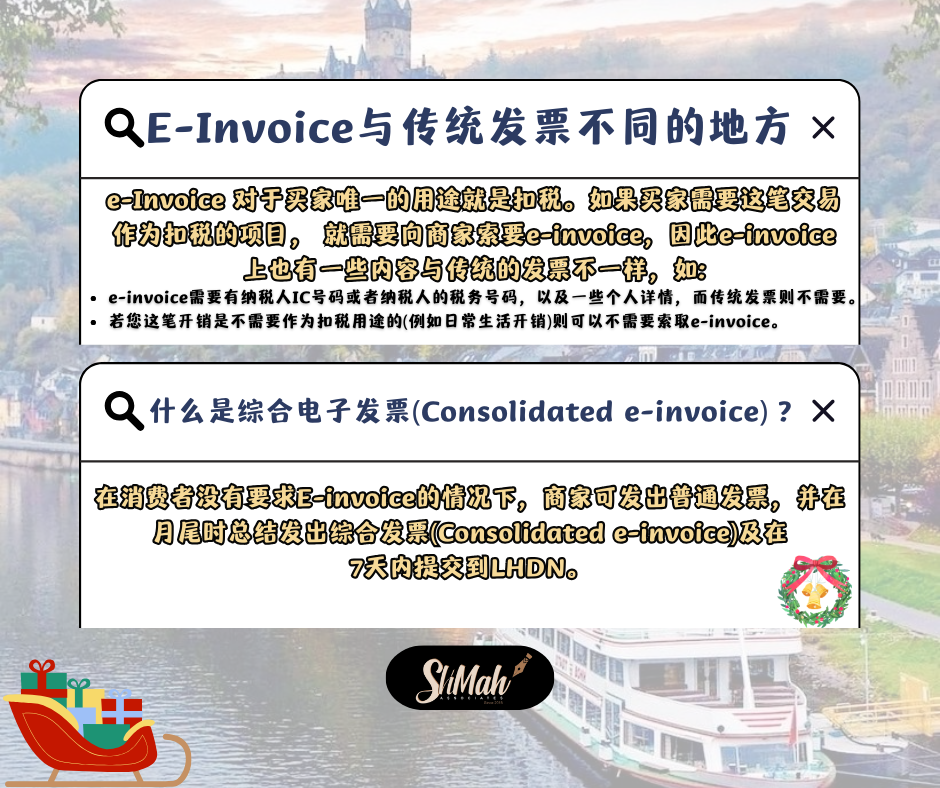
How is E-Invoice different from traditional invoices?
The sole purpose of e-invoice for buyers is tax deduction. If buyers require the transaction for tax deduction purposes, they need to request e-invoice from the merchant. Hence, there are some differences between e-invoice and traditional invoices, such as:
E-invoice requires the taxpayer’s IC number or taxpayer identification number, along with some personal details, whereas traditional invoices do not.
If the expense is not needed for tax deduction purposes (e.g., daily living expenses), e-invoice can be omitted.

What is a Consolidated E-Invoice?
In cases where consumers do not request an e-invoice, merchants can issue regular invoices and, at the end of the month, summarize and issue a consolidated e-invoice, which must be submitted to LHDN within 7 days.

What is a self-billed e-invoice?
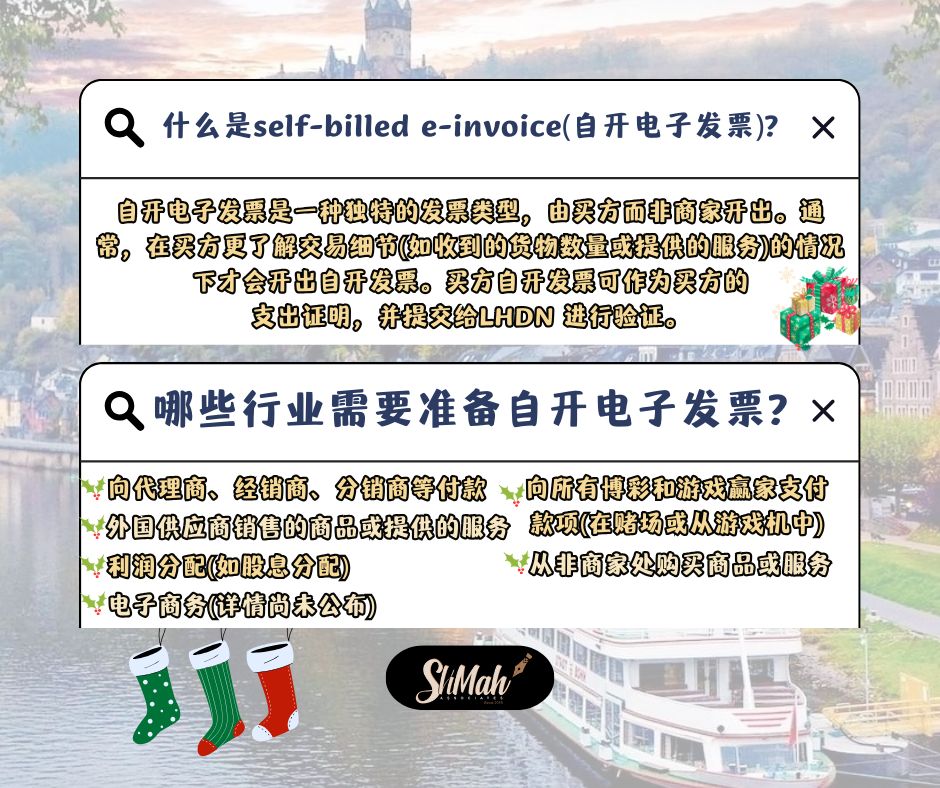
A self-billed e-invoice is a unique type of invoice issued by the buyer rather than the merchant. Typically, it is issued when the buyer has a better understanding of the transaction details (e.g., quantity of goods received or services provided). Self-billed invoices serve as proof of the buyer’s expenses and can be submitted to LHDN for verification.

Industries that Need to Prepare Self-Billed E-Invoices:

  • Payments to agents, distributors, dealers, etc.
  • Goods sold or services provided by foreign suppliers
  • Profit distributions (such as dividend distributions)
  • Payments to all gambling and gaming winners (at casinos or from gaming machines)
  • E-commerce (details yet to be announced)
  • Purchases of goods or services from non-merchants

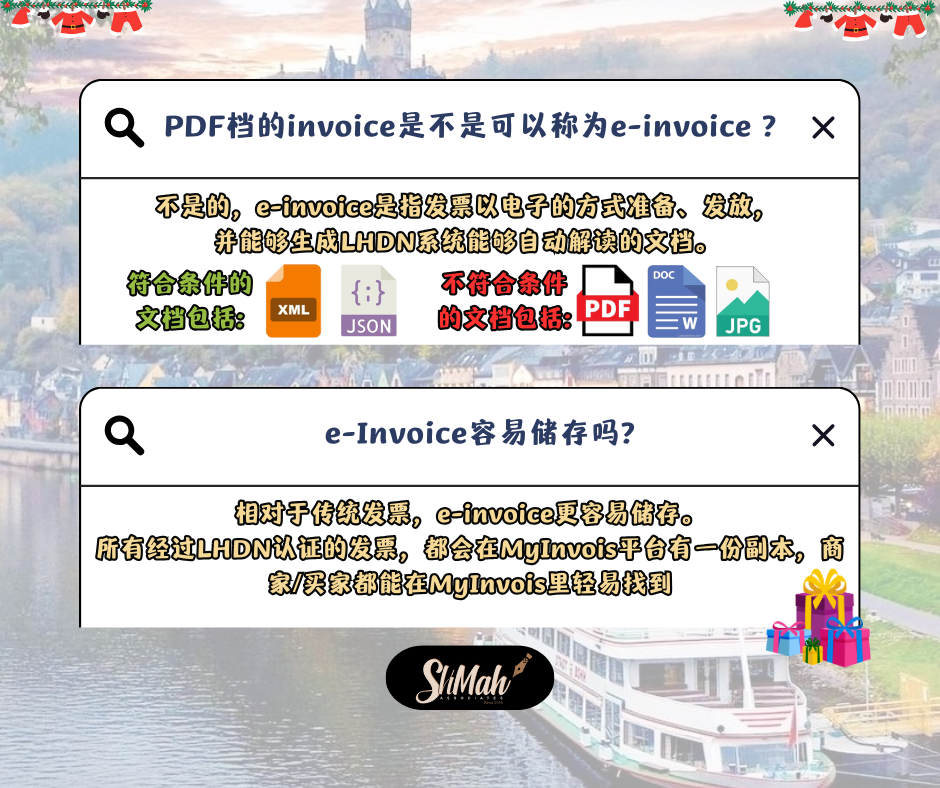
Can a PDF document be considered an e-invoice?
No, an e-invoice refers to an invoice prepared and issued electronically, capable of generating documents that the LHDN system can automatically interpret.
Eligible document formats include: XML, JSON
Ineligible document formats include: PDF, JPG

Is it easy to store E-Invoices?
Compared to traditional invoices, e-invoices are easier to store. All invoices certified by LHDN will have a copy on the MyInvois platform, accessible to both merchants and buyers.

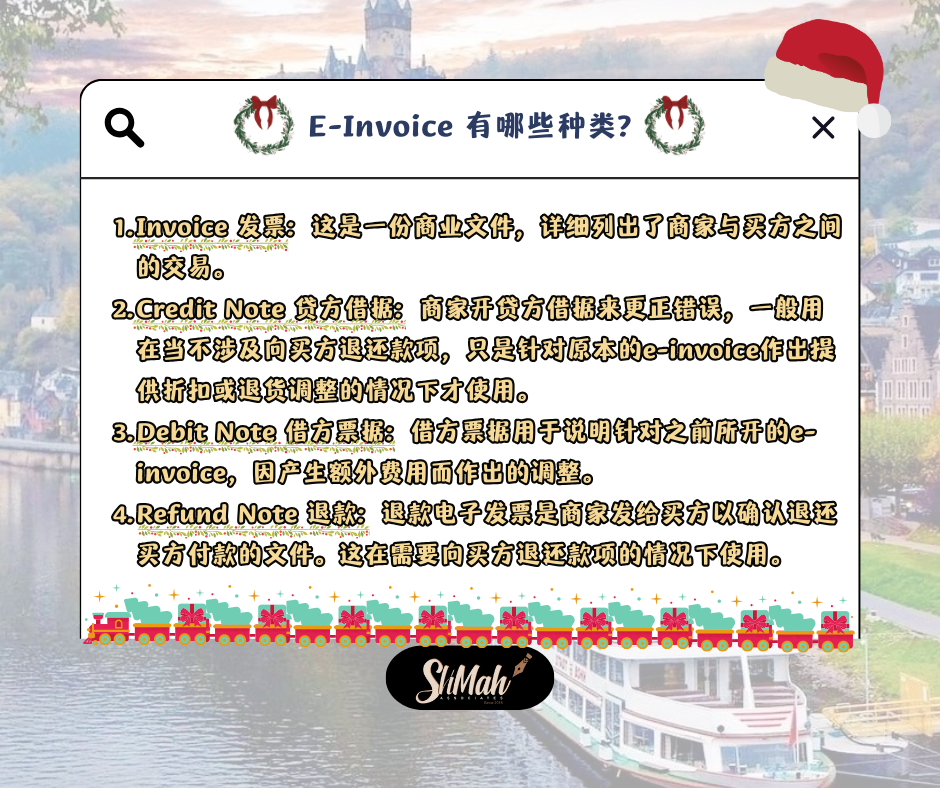
What types of E-Invoices are there?

  1. Invoice: This is a commercial document detailing transactions between a merchant and a buyer.
  2. Credit Note: Merchants issue credit notes to correct errors. It is typically used when there is no refund to the buyer, but adjustments are made for discounts or returns against the original e-invoice.
  3. Debit Note: Debit notes are used to explain adjustments made against previously issued e-invoices due to additional charges incurred.
  4. Refund Note: A refund e-invoice is issued by a merchant to confirm the repayment of funds to the buyer. It is used when a refund to the buyer is necessary.

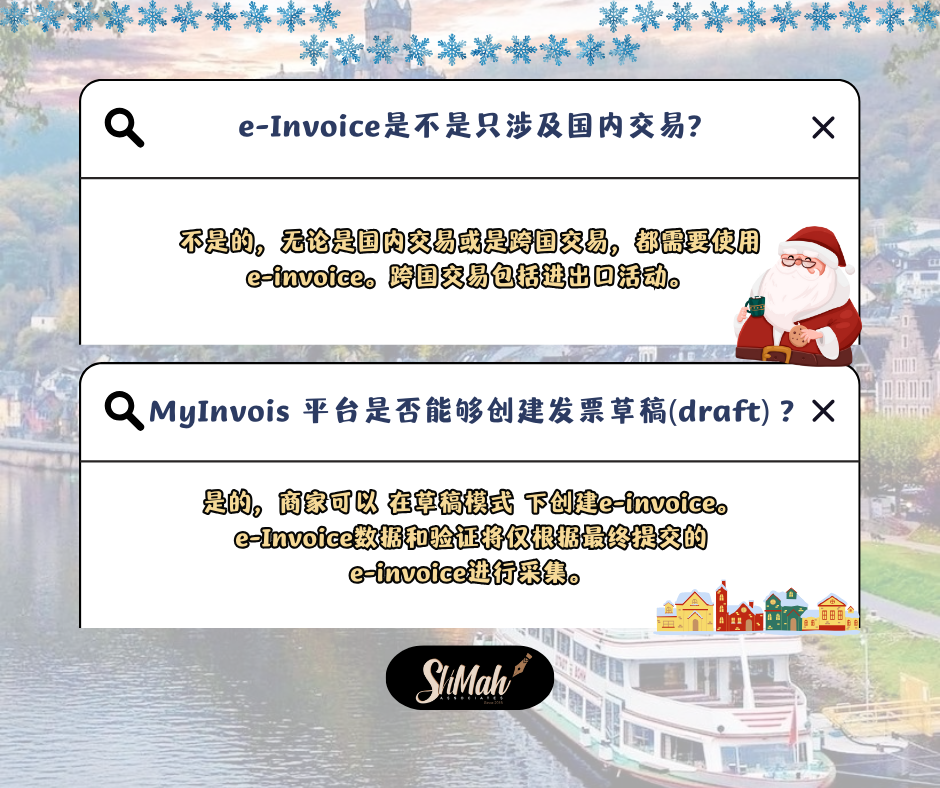
Does E-Invoice only involve domestic transactions?
No, E-Invoice is required for both domestic and cross-border transactions, including import and export activities.

Can the MyInvois platform create invoice drafts?
Yes, merchants can create e-invoices in draft mode. E-invoice data and validation will only be collected based on the final submitted e-invoice.

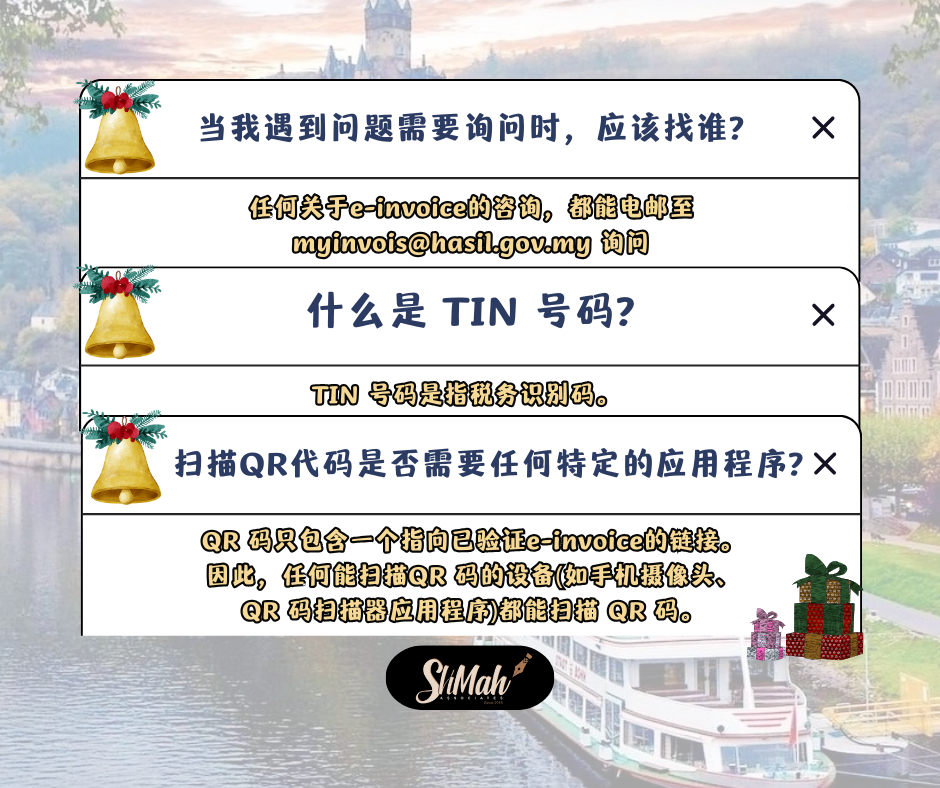
Whom should I contact for inquiries when encountering issues?
For any inquiries regarding e-invoice, you can email myinvois@hasil.gov.my.

What is a TIN number?
A TIN number refers to a Tax Identification Number.

Do I need any specific application to scan the QR code?
The QR code only contains a link to the verified e-invoice. Therefore, any device capable of scanning QR codes (such as a mobile phone camera or QR code scanner application) can scan the QR code.